
What Is Ikigai? The Real Japanese Secret to a Life of Purpose, Health, and Joy
You have probably seen the ikigai diagram — four overlapping circles representing what you love, what you are good at, what the world needs, and what you can be paid for. It is a clean, compelling image. It spread across the internet and into corporate wellness seminars and self-help books around the world.
But here is what most of those circles leave out: the real meaning of ikigai.
In Japan, ikigai (pronounced ee-kee-guy) is not a productivity framework or a career planning tool. It is a deeply personal, often quiet sense of purpose that makes each day worth living. Researchers studying the long-lived people of Okinawa — one of the world's famous Blue Zones — found ikigai at the center of their extraordinary health and longevity. Not the diagram. The feeling. The daily reason to rise.
I know the difference between the two because I have lived both — the empty version and the real one.
WHAT IKIGAI REALLY MEANS — The Authentic Context

The word ikigai combines two Japanese concepts: "iki" (life, alive) and "gai" (worth, benefit, result). Together they describe the source of value in one's life — the thing that makes getting up in the morning feel natural rather than forced.
In Japanese culture, ikigai is not reserved for grand life purposes. It can be as intimate as tending a garden, as simple as a morning cup of tea shared with a neighbor, or as quiet as watching the sun rise over water. The Okinawan elders studied by researchers did not describe ikigai in terms of careers or income. They described it in terms of relationships, daily rituals, and the sense that their lives had meaning to others.
The four-circle Venn diagram that became popular in Western self-help circles is actually adapted from a different Japanese concept called 'purpose' frameworks — it is not the traditional Japanese understanding of ikigai at all. The authentic concept is more organic, more personal, and far more accessible than the diagram suggests.

IKIGAI, LONGEVITY, AND WELLBEING — What the Research Shows
The connection between ikigai and physical health is not anecdotal. Research from Japan has consistently linked a strong sense of ikigai with lower rates of cardiovascular disease, reduced risk of dementia, stronger immune function, and longer life. A landmark study published in the journal Psychosomatic Medicine followed over 43,000 Japanese adults and found that those who reported a clear sense of ikigai were significantly less likely to die from cardiovascular causes over a seven-year period.
More recent research in the field of positive psychology — including work referenced in academic journals — connects ikigai with what psychologists call eudaimonic wellbeing: the kind of deep, meaning-based flourishing that goes beyond simply feeling good in the moment. People with strong ikigai report higher life satisfaction, greater resilience under stress, and stronger social connections.
For veterans managing service-connected conditions, this research carries particular weight. Chronic pain, PTSD, and the transition challenges of post-military life can erode a person's sense of purpose in ways that go deeper than any medication can reach. Finding ikigai is not a luxury for veterans. In my experience, it is medicine.
MY IKIGAI STORY — From Managing to Living
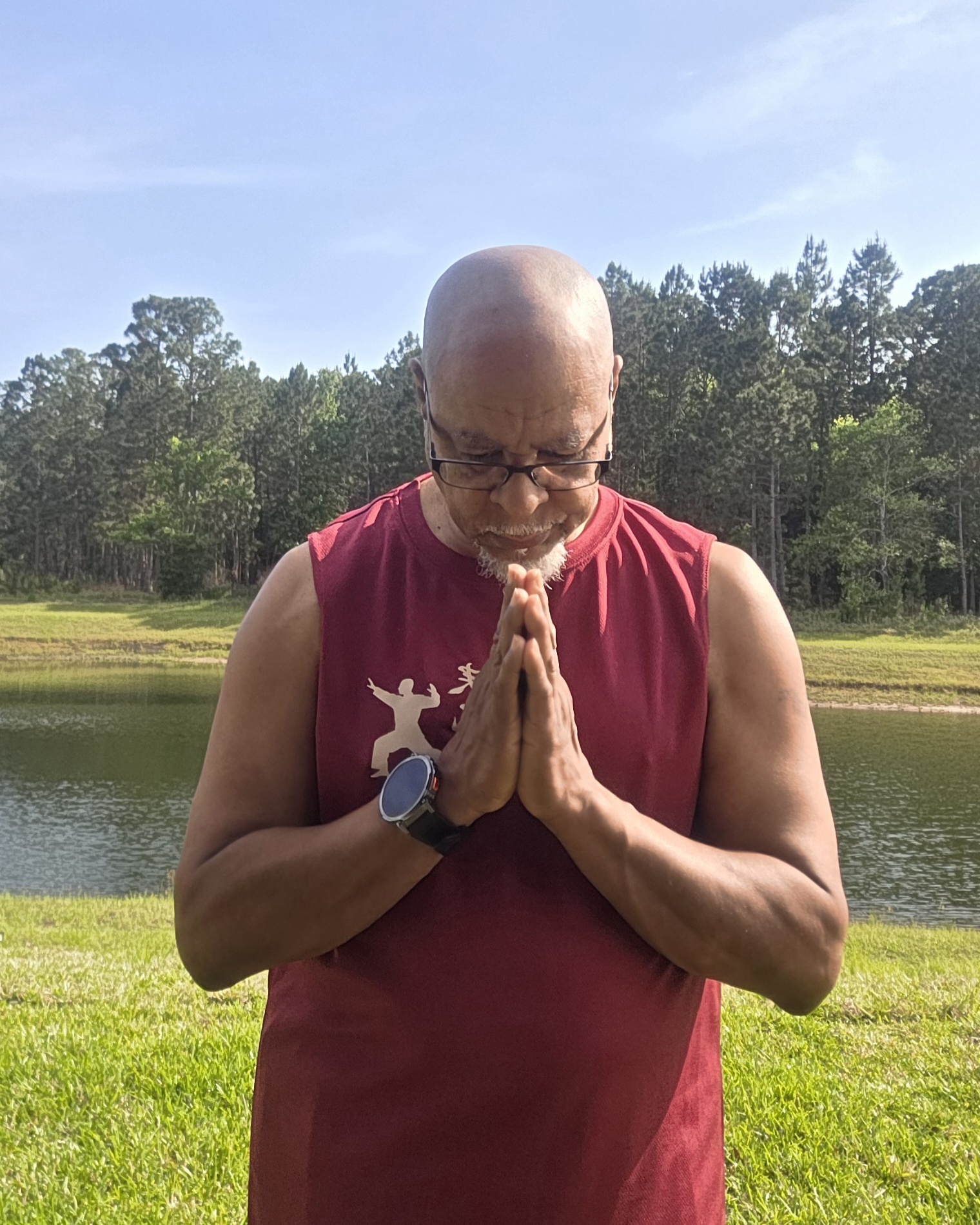
I served nearly 13 years combined in the United States Marine Corps as an Infantry/Recon operator and in the United States Army. I came home carrying PTSD, Degenerative Disk Disease, Osgood Schlatter Disease, Raynaud's Phenomenon, Tinnitus, and Sleep Apnea — along with a list of prescription medications to manage all of it.
For a long time I was managing my life rather than living it. I was in two or three of the ikigai circles on any given day. I loved helping people. I was reasonably good at it. But I was not doing it in a way that the world truly needed, and I was certainly not being paid for it in any meaningful way. Something was always slightly misaligned.
About a year ago, at 190 pounds and perpetually exhausted, I made a quiet decision to change. I started walking. I began practicing Tai Chi — prescribed by my own physician for my service-connected conditions. I discovered Vital Health Global's plant-based supplements, which eventually helped my doctor take me off one of my blood pressure prescriptions and my D3 and B12 supplements. I began coaching again with fresh intention. And slowly, the four circles started to move toward each other.
Today I am 25 pounds lighter. My mental clarity has returned. I am pursuing my Tai Chi Instructor certification, completing my Spiritual Coach certification, and studying digital health transformation through Harvard Medical School's Executive Education program. I run U Force Wellness, LLC. I walk three miles everyday around the lake behind my home — and my daughter Terria, whom I lost in November 2025, walks with me in the water, the trees, the sky, and the birds she once photographed on that same path.
That is my ikigai. Not a diagram. A life.

FINDING YOUR IKIGAI — Four Questions Worth Sitting With

The four-circle framework, whatever its origins, does offer a useful starting point for reflection. Rather than treating it as a precise formula, think of these as four honest questions to sit with over time:
1. What do you love?
Not what you think you should love, or what others expect you to love. What activities, relationships, and experiences make you lose track of time? What would you do even if no one ever paid you or praised you for it? For me the answer included helping people find their way through difficult terrain — which I did as a Marine, as a life coach, and now as a wellness guide.
2. What are you good at?
This is not false modesty territory. What do people consistently come to you for? What skills and abilities have you developed that genuinely serve others? Be specific. 'Good with people' is a start — but what kind of people, and in what way? Your military service, your professional history, your personal struggles all built capabilities that are more valuable than you may currently recognize.
3. What does the world need?
Look around you. What problems are going unsolved in your community? What pain do people carry that you recognize because you have carried it yourself? Veterans managing chronic conditions. People searching for natural alternatives to prescription dependency. Individuals who feel the pull of purpose but cannot quite locate it. These are real needs — and they are the ones I built U Force Wellness to serve.
4. What can you be paid for?
This question makes some people uncomfortable, as if including income somehow
contaminates the purity of purpose. It does not. Sustainable purpose requires
sustainable resources. The question is not 'how do I maximize income' but rather
'how do I build a livelihood that honors my purpose rather than undermining it.'
That is exactly what I am building — and what I help others build.

IKIGAI FOR VETERANS — Why This Concept Matters for Those Who Served
Military service gives veterans something most civilians spend their entire lives searching for: a clear mission, a defined tribe, and an unambiguous sense that their daily actions matter. The transition out of service can feel like losing all three at once.
I have spoken with veterans who describe the post-service years not as freedom but as disorientation — the loss of the ikigai they had in uniform without any clear path to finding a new one. Add service-connected disabilities, prescription medication management, and the invisible weight of PTSD, and that disorientation can become something much darker.
Ikigai offers veterans a framework — not a military one, not a corporate one, but a deeply human one — for rebuilding purpose after service. The discipline, the mission orientation, the loyalty, the willingness to serve something larger than oneself: these are not liabilities in civilian life. They are the raw materials of extraordinary ikigai.
The question is simply: where do they get directed now?
That is the work I do at U Force Wellness. And it is the work I invite you to begin.
THREE PRACTICAL EXERCISES TO BEGIN FINDING YOUR IKIGAI
Exercise 1 — The Morning Question
For the next seven days, before you look at your phone or start your day, sit quietly for five minutes and answer one question in a journal: 'What am I looking forward to today, and why?' Pay attention to what comes up consistently. The things that genuinely energize you — even small things — are pointing toward your ikigai.
Exercise 2 — The Eulogy Reflection
This is a powerful but gentle exercise. Imagine the eulogy that someone who loves you deeply would give at the end of a long, well-lived life. What would you want them to say about how you spent your time? Who you served? What you built? What you gave? The gap between that eulogy and your current daily life is where the ikigai work begins.
Exercise 3 — The Energy Audit
For one week, notice which activities leave you feeling more energized and which
leave you feeling depleted — regardless of whether they are objectively 'good' or
'productive.' Ikigai tends to live in the energizing column. This simple audit has
helped many of my coaching clients identify their purpose more quickly than any
framework.
WHAT'S NEXT — Explore, Connect, or Begin
If this page has stirred something in you — a recognition, a question, an inkling of where your own ikigai might live — I am glad. That stirring is worth following.
Explore Further:
- Read: Ikigai Meaning — The Authentic Japanese Concept and How It Applies to Your Life
- Read: Finding My Life Purpose — A Veteran's Ikigai Story
- Read: Find Your Life Purpose in 4 Simple Questions
- Read: The Ikigai Framework for Veterans — Rebuilding Purpose After Service
Ready to Go Deeper?
As a Certified Master Life Coach with nearly two decades of credentials, I offer a
free 15-minute wellness consultation — no pitch, no pressure. Just a genuine
conversation about where you are and what your own ikigai might look like. If you
are a veteran, a purpose-seeker, or simply someone who knows there has to be
more — I understand. I have been exactly where you are.
The light is on. Come home.
CONTACT ME: CLICK HERE
No Limits. No Excuses. 🕯️
Terry L. Bowser Sr.
US Marine Corps Infantry/Recon | US Army Veteran
Certified Master Life Coach | Tai Chi Instructor (Incoming)
Accredited Alternative Healer & Soul Care Provider (AAHSCP)
Ambassador of Light | U Force Wellness, LLC
uforcewellness.com | terry@uforcewellness.com
🕊️ In Honor of Terria 'RiRi' Bowser
