
Find a Health and Life Coach
Who Has Actually Lived What They Teach
Here is something worth knowing before you hire a life coach: the industry is entirely unregulated. Anyone can call themselves a life coach. There are no licensing requirements, no educational minimums, no governing body that verifies credentials or outcomes. That is simply true — and reputable coaches will tell you so.
Which means when you are looking for a health and life coach, the questions you ask matter enormously. Not just 'what are your certifications?' but 'what have you actually been through? What did you change? How did you change it? And can you show me any evidence that it worked?'
I can answer all of those questions — honestly, specifically, and with medical validation behind the answers.
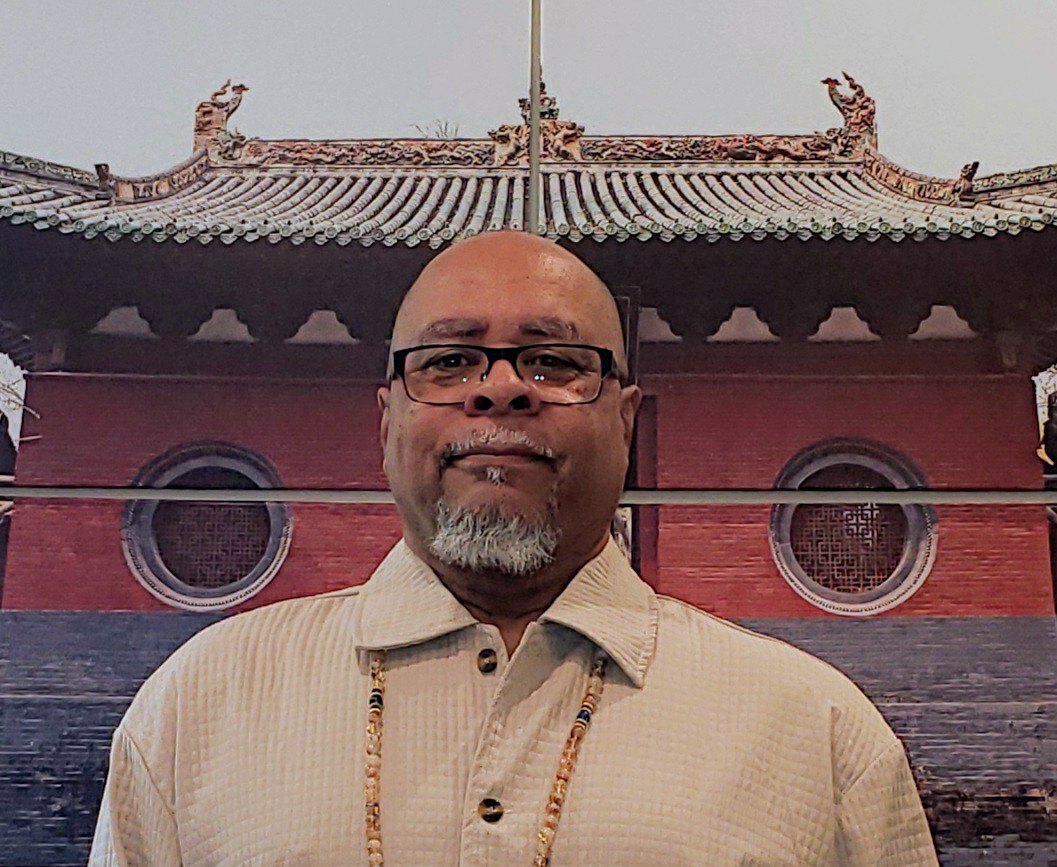
My name is Terry L. Bowser Sr. I am a Certified Master Life Coach with nearly two decades of credentials, a certified Tai Chi Instructor, an Accredited Alternative Healer and Soul Care Provider, and a Spiritual Coach. I am also a VA-rated disabled veteran who transformed my own health naturally — losing 25 pounds, improving measurably across multiple health markers, and having my physician make specific changes to my medications and supplement regimen based on actual lab results.
I do not coach from theory. I coach from experience. And I work with clients virtually — by phone or video — which means geography is not a barrier. Whether you are in Atlanta, Anchorage, or anywhere in between, we can work together.
WHAT LIFE COACHING ACTUALLY IS — AND WHAT IT IS NOT
Life coaching is a results-oriented, forward-focused relationship between a coach and a client. A good life coach helps you identify where you are, clarify where you want to be, understand what is getting in the way, and build a practical path forward. The emphasis is on action, accountability, and growth — not on processing past trauma or treating diagnosed mental health conditions.
This distinction matters. Life coaching is not therapy. It is not counseling. It does not replace professional mental health care — and any coach who tells you otherwise is overstepping their role. If you are managing serious psychological conditions, a licensed therapist or psychologist is the appropriate professional. A good life coach will tell you this directly and, where relevant, encourage you to work with both.
What life coaching can do — and does well — is address the gap between where you are and where you want to be in areas like purpose, career direction, health and wellness habits, relationships, personal development, and the practical construction of a life that feels genuinely aligned with who you are and what you value.

TYPES OF LIFE COACHING — WHERE I FIT
Life coaching covers a wide range of specializations. Here is an honest overview of the main types and where my work specifically fits:
General Life Coaching
Broad personal development work covering goal setting, mindset, habits, relationships, and life direction. This is where most coaches operate. I have nearly two decades of experience here — it is the foundation of everything else I do.
Health and Life Coaching
Coaching that specifically integrates physical wellness with personal development. This is my primary intersection — as a certified Tai Chi Instructor, Accredited Alternative Healer, and someone who has navigated a personally validated health transformation, I work with the connection between how you feel physically and how clearly you can pursue your goals. You cannot separate the body from the
mind in meaningful coaching work.
Spiritual Life Coaching
Coaching that addresses the deeper dimensions of meaning, purpose, and inner life. As a Spiritual Coach and Ambassador of Light, I work with clients on the soul level questions that conventional coaching often skips — the sense of meaning, connection, and inner peace that sustains everything else. This is not religious in any specific doctrinal sense. It is deeply human.
Life Transformation Coaching
Coaching oriented around fundamental life change — not just goal achievement but identity-level transformation. My work with the Ikigai framework falls here. Finding your Ikigai — the intersection of what you love, what you are good at, what the world needs, and what sustains you — is not a goal-setting exercise. It is a transformation process. And it is some of the most powerful work I do.
Veteran Life Coaching
Coaching specifically for veterans navigating the physical, psychological, and purpose-related challenges of post-service life. This is the area where my experience as a Marine Corps Infantry/Recon operator and Army veteran gives me a perspective that no civilian coach can fully replicate. I have lived a version of what my veteran clients carry — and that changes the quality of the conversation
fundamentally.
MY CREDENTIALS — What Nearly Two Decades Looks Like
Because life coaching is unregulated, I want to be transparent about exactly what I have and what it means:
- Certified Master Life Coach — Transformation Academy (January 2020) — Advanced certification covering comprehensive life coaching methodology. Transformation Academy appears in the ICF's related organizations listing.
- Advanced Life Coaching Diploma — Advanced Life Coaching Institute (2010)
- Life Coaching Diploma — Advanced Life Coaching Institute (2007)
- Tai Chi Instructor Certification — Open the Door to Tai Chi, recognized by ACE, NASM, ACSM, and FAI (2026)
- Accredited Alternative Healer and Soul Care Provider (AAHSCP) — Place of Bliss Academy (2026)
- Spiritual Coach — Awakened Academy (2026)
- Certificate of Completion — Leading Digital Transformation in Health Care, Harvard Medical School Executive Education (in progress, April–June 2026)
- US Marine Corps Infantry/Recon | US Army — nearly 13 years combined service
None of these credentials make me the right coach for everyone. What they represent is sustained commitment to this work over nearly two decades — and a breadth of perspective that allows me to meet clients across multiple dimensions of their wellness and purpose journey.
HOW TO FIND THE RIGHT LIFE COACH — An Honest Guide
Whether you work with me or someone else, here is genuinely useful guidance for finding a health and life coach who will actually serve you well:
1. Ask about credentials — and verify them
Ask specifically which organizations issued the credentials and what the training involved. Reputable certifications come from organizations with actual curriculum, supervised practice, and ethical standards. Be appropriately skeptical of coaches who cannot explain their credentials clearly.
2. Ask about their own experience
The most effective coaches have navigated meaningful personal transformation themselves. Not because suffering is a qualification, but because lived experience produces a quality of understanding that no textbook provides. Ask what they have been through. Ask what they changed. Ask how.
3. Look for specialization that matches your situation
A coach who specializes in career transitions may not be the best fit for someone managing chronic health conditions and searching for life purpose. Match the coach's specific experience and credentials to your specific situation.
4. Request a free consultation
Any reputable coach should offer an initial consultation at no charge. This is how both parties determine fit — and fit matters enormously in coaching. The relationship only works if there is genuine connection and mutual respect.
5. Be honest about what you need
If you are managing serious mental health conditions, a life coach is not the right primary support — a licensed therapist is. If you are ready to do the forward focused work of purpose, health, and personal transformation — a good health and life coach can be genuinely life-changing.
WHY WORK WITH TERRY — The Honest Version

I am going to tell you the honest version of why you might choose to work with me — and why you might not.
You might be the right fit if:
- You are a veteran managing service-connected conditions who wants a coach who understands what service actually costs
- You are searching for your Ikigai — the deep intersection of purpose, passion, skill, and contribution — and want a guide who has found their own
- You want your physical wellness and your life direction addressed by the same person, not compartmentalized into separate relationships
- You value honesty over hype and want a coach who will tell you the truth even when it is not what you hoped to hear
- You are ready to do the actual work — not just talk about it
I am probably not the right fit if:
- You are looking for a coach who will simply validate everything you are already doing
- You are managing serious psychological conditions that require licensed mental health care — I will support your work with a therapist, but I am not a replacement for one
- You want someone who will promise specific outcomes — I do not make promises I cannot keep.
WHAT'S NEXT — Explore Further or Let's Talk
If this page has resonated — if you recognize yourself in any of the situations I have described — here are your next steps:
Explore Further:
- Find a Life Coach — What to Look For and What to Avoid
- Online Life Coach — How Virtual Coaching Changes Lives
- Health and Life Coach — When Wellness and Purpose Collide
- Life and Wellness Coach — The Difference It Makes
- Master Life Coach — What the Credential Actually Means
- Spiritual Life Coach — Coaching the Whole Person
Ready to Talk?
I offer a free 15-minute consultation — a genuine conversation about where you
are and what you are working toward. No pitch, no pressure. If I can help you, I
will tell you how. If I am not the right fit, I will tell you that too and point you
somewhere that is.
I work with clients virtually nationwide — phone or video — so location is not a
barrier.
CONTACT ME: CLICK HERE
No Limits. No Excuses. 🕯️
Terry L. Bowser Sr.
US Marine Corps Infantry/Recon | US Army Veteran
Certified Master Life Coach | Tai Chi Instructor (Incoming)
Accredited Alternative Healer & Soul Care Provider (AAHSCP)
Ambassador of Light | U Force Wellness, LLC
uforcewellness.com | terry@uforcewellness.com
🕊️ In Honor of Terria 'RiRi' Bowser
